In this feature, I ask my friend BG Green to talk a little bit about Carleton's phenomenal season that culminated with a National Championship at least week's USA Ultimate D-III College Championships. Last season, I had the privilege of guest coaching Eclipse for a few games at Midwest Throwdown, and since then, I have been a huge fan and have followed them closely. BG shares the story of Eclipse's season and their path to the top.
--
“The whole season rests on this: FIND YOUR SWAGGER.”
These were the prolific words of an esteemed CUT captain given to Eclipse early on in the 2010-2011 season. Our team goal of making it to DIII Nationals seemed to fit nicely within this adage and we adopted it as we embarked upon our regular season. Eclipse was going to be different this year; we were practicing harder, training for fitness, and throwing outside of practice. We focused on developing relationships within the lines and strengthening the connections between handlers and cutters. During winter term several GOP boys began coming regularly to practice, helping us workout the kinks in our offense and perfecting our defensive game. While we may not be the most experienced Frisbee team, we have speed and athleticism, assets that Eric Manley and Sam Tucker helped us capitalize on.
As we began tournament play, Leigh-Anne and I understood that we were leading a new team. We knew we had fostered a more intense environment and a greater dedication to ultimate but we had yet to test it. As it turned out every tournament proved our success and the success of Eclipse. We were undefeated against DIII teams and challenged strong DI school with our zone-defense and huge hucks. Placing 2nd at regionals, we had to reevaluate: we could do more than just attend DIII Nationals.
We arrived at Buffalo seeded first, the first National appearance in Eclipse history and the ultimate quest for swagger. In typical Eclipse fashion we started five of our six games down at least a break. Our first big test came in the semi-finals against Valparaiso’s tight zone. After trading points we began to work our way through their zone for a close-win and a bid to the finals. Williams had played well all weekend and we were excited to start the game. To our horror we went down 0-5. It was in this moment, thirty minutes into the finals game of DIII Nationals, that we found our swagger. Not a single person gave up, every Eclipser wanted that victory and we battled our way onto the board. The strength and grit shown on the field was a testament to the hard work of the regular season. Counting on the adaptability of the team, Sam Tucker explained a new “junk” defense that focused on poaching the lane and Eclipse was able to execute it within minutes of learning it to pull ahead. I have never seen, let alone been a part of, a team who played so relentlessly. The trust we have in each other was apparent. To win in such an incredible fashion defined our season. We had challenged each other to become more competitive and we had succeeded.
Showing posts with label Team Feature. Show all posts
Showing posts with label Team Feature. Show all posts
Thursday, May 26, 2011

Virginia Hydra
Virginia's womens team, Hydra, has been one to watch the past few years. The team returns to the College Championships for the first time since 2004. Building the team back to this level has been the outcome of much hard work, and this team has been doing it every season since I've been playing. To see how far this team has come is remarkable. Co-captains Devon Ericksen and Shannon McVey give some insight to the team that is making the return to the big show, and about the process that took them there.
You guys have had to rebuild your program. Tell us a little about that process and the role you've played.
Our program has seen tremendous growth in the last two years. In 2008, we had a huge rookie class that has grown into a strong and talented core of vets. Coupled with taking on Dan Perry as a coach, the team began the building process. Dan coached Hydra for two years, and working with captains Brittany Taylor, Alex Weinberg, and Hannah Green, he set us up to do big things. In 2010, James "Shoes" Burke and David Allison took over as coaches, working with captains Shannon McVey and Devon Ericksen to continue the tremendous growth of the previous two years. This growth is due to the dedication of the captains and coaches, as well as the team's enthusiasm and hard work.
What are some of your favorite moments from the 2011 season?
Centex was a whirlwind of excitement for our team this year. It was a testament to how much we have grown not only in terms of skill, but in terms of mental strength. In our first year attending in 2010, our nerves held us back and we finished the weekend with only one win. A year later, we channeled any nerves we had left into positive energy, and that really shined through in every game, as we played competitively with some of the top teams in the country. Finishing in 12th place after coming in seeded 21st, we proved that we could compete on the national level.
How does it feel to go to Nationals for the first time since '04?
It feels like all of our hard work is finally paying off. Earning that third bid for the AC region was a tremendous feeling, and following through to make it to Nationals feels even better. Hydra had set its sights on Nationals ever since watching the UVA men's team, Night Train, compete in Columbus in 2009. Sitting on the fields in Columbus, Hydra decided to make Nationals a goal. Two years later, we've reached that goal, and couldn't be more excited.
How did Regionals go? Anything special or noteworthy?
Regionals was exciting, nerve wracking, and satisfying. We knew what was at stake, but took the weekend game by game, never mentally getting ahead of ourselves. An exciting part of the weekend was playing UNCW in the semis. Seaweed is fast and athletic, but we played with a level of heart that was not reflected in the final score. Especially exciting to watch was rookie Mary Kelly dominate in the air against some of UNCW's most talented players. Sunday's biggest challenge, however, was playing Maryland to take us to the game to go. Maryland is a talented team who tested us mentally and physically. After a rough first half of trading points, we slowed the game down in the second half and found our flow, taking the game 15-8. The game to go against NC State was fun to watch and fun to play in. Abby Clement set the tone with a layout D in the first point of the game, and our offensive flow led by Maggie John's skilled throws as a beautiful sight to see.
Any injuries sustained at Regionals? Any personnel losses or gains?
Hydra had the misfortune of losing captain Shannon McVey to a knee injury after Regionals. Shannon is a talented and versatile cutter whose presence will be sorely missed on the field.
Taking any precautions or special preparations for nationals?
We are taking extra care to get acclimated to the altitude by holding practices in Boulder on Wednesday and Thursday.
You guys have had to rebuild your program. Tell us a little about that process and the role you've played.
Our program has seen tremendous growth in the last two years. In 2008, we had a huge rookie class that has grown into a strong and talented core of vets. Coupled with taking on Dan Perry as a coach, the team began the building process. Dan coached Hydra for two years, and working with captains Brittany Taylor, Alex Weinberg, and Hannah Green, he set us up to do big things. In 2010, James "Shoes" Burke and David Allison took over as coaches, working with captains Shannon McVey and Devon Ericksen to continue the tremendous growth of the previous two years. This growth is due to the dedication of the captains and coaches, as well as the team's enthusiasm and hard work.
What are some of your favorite moments from the 2011 season?
Centex was a whirlwind of excitement for our team this year. It was a testament to how much we have grown not only in terms of skill, but in terms of mental strength. In our first year attending in 2010, our nerves held us back and we finished the weekend with only one win. A year later, we channeled any nerves we had left into positive energy, and that really shined through in every game, as we played competitively with some of the top teams in the country. Finishing in 12th place after coming in seeded 21st, we proved that we could compete on the national level.
How does it feel to go to Nationals for the first time since '04?
It feels like all of our hard work is finally paying off. Earning that third bid for the AC region was a tremendous feeling, and following through to make it to Nationals feels even better. Hydra had set its sights on Nationals ever since watching the UVA men's team, Night Train, compete in Columbus in 2009. Sitting on the fields in Columbus, Hydra decided to make Nationals a goal. Two years later, we've reached that goal, and couldn't be more excited.
How did Regionals go? Anything special or noteworthy?
Regionals was exciting, nerve wracking, and satisfying. We knew what was at stake, but took the weekend game by game, never mentally getting ahead of ourselves. An exciting part of the weekend was playing UNCW in the semis. Seaweed is fast and athletic, but we played with a level of heart that was not reflected in the final score. Especially exciting to watch was rookie Mary Kelly dominate in the air against some of UNCW's most talented players. Sunday's biggest challenge, however, was playing Maryland to take us to the game to go. Maryland is a talented team who tested us mentally and physically. After a rough first half of trading points, we slowed the game down in the second half and found our flow, taking the game 15-8. The game to go against NC State was fun to watch and fun to play in. Abby Clement set the tone with a layout D in the first point of the game, and our offensive flow led by Maggie John's skilled throws as a beautiful sight to see.
Any injuries sustained at Regionals? Any personnel losses or gains?
Hydra had the misfortune of losing captain Shannon McVey to a knee injury after Regionals. Shannon is a talented and versatile cutter whose presence will be sorely missed on the field.
Taking any precautions or special preparations for nationals?
We are taking extra care to get acclimated to the altitude by holding practices in Boulder on Wednesday and Thursday.
Ohio State Fever
A few years ago, I was able to pick up with a Cornell B team at College Southerns, along with several players from Ohio State Fever. I got to know some of the players that helped lay the foundation on this team, and learned about their team. I could not be happier for the 2011 Fever team for qualifying for the big show. This team is young but talented. No one expected them to qualify, but they took out the top teams in their region who have been perennial qualifiers in recent years such as Penn State, Pitt, and UPenn. Leaders Cassie and Deanna detail their season and how it feels to be the "underdogs" at the tournament.
How did the team approach this season? Was this one different than in years past?
Deanna: Dedicated to conditioning (training camp, workouts outside of practice), developing new recruits/rookies, focusing on key strategies to carry the team at tournaments, learning proper throwing skills across the board, and building a "fraternity" of players. Teams in the past relied on a small-ish core of players; this year the squad goes deep.
Cassie: We definitely approached this season with a more competitive mindset than in years past. We adopted this mindset before the season even started, picking up two assistant coaches with TONS of experience, Brent Reeb and Rodger Oakes, to join our returning head coach, Deanna Ball (who also has TONS of experience). Before the season began, we had a returner-only week of conditioning and a weekend training camp to get everyone on the same page before we started to bring in new players. By the end of the week, the word “Nationals” was floating around amongst everyone on the team. It was evident that this was what we would be working toward all season. During a team meeting about halfway through the fall season, we asked everyone, “Do you really want to make it to Nationals, or do you just think it would be cool to make it to Nationals?” I’ve only been around for two years, so I can only truly speak for last year. But I think in the past, the general feeling on Fever was that it would be cool to qualify for Nationals, but we never really expected to make it. This year, we definitely had expectations. We cracked down on attendance, added another mandatory practice, and went to more competitive tournaments. After the kind of work that we put in this year, I knew that a loss at Regionals would be heartbreaking. So I’m glad we didn’t have to experience it!
How did Regionals go? Anything special or noteworthy?
Deanna: We're trying to add some new things so as to not be predictable; but also focused on doing the things we do really well.
Any injuries sustained at Regionals? Any personnel losses or gains?Deanna: We've had 1 player down with a broken finger, but that came before Sectionals. Fever's conditioning seems to be paying off--the team has not sustained any injuries that have required reduced playing time.
Taking any precautions or special preparations for nationals? How are you prepping physically/mentally?
How did the team approach this season? Was this one different than in years past?
Deanna: Dedicated to conditioning (training camp, workouts outside of practice), developing new recruits/rookies, focusing on key strategies to carry the team at tournaments, learning proper throwing skills across the board, and building a "fraternity" of players. Teams in the past relied on a small-ish core of players; this year the squad goes deep.
Cassie: We definitely approached this season with a more competitive mindset than in years past. We adopted this mindset before the season even started, picking up two assistant coaches with TONS of experience, Brent Reeb and Rodger Oakes, to join our returning head coach, Deanna Ball (who also has TONS of experience). Before the season began, we had a returner-only week of conditioning and a weekend training camp to get everyone on the same page before we started to bring in new players. By the end of the week, the word “Nationals” was floating around amongst everyone on the team. It was evident that this was what we would be working toward all season. During a team meeting about halfway through the fall season, we asked everyone, “Do you really want to make it to Nationals, or do you just think it would be cool to make it to Nationals?” I’ve only been around for two years, so I can only truly speak for last year. But I think in the past, the general feeling on Fever was that it would be cool to qualify for Nationals, but we never really expected to make it. This year, we definitely had expectations. We cracked down on attendance, added another mandatory practice, and went to more competitive tournaments. After the kind of work that we put in this year, I knew that a loss at Regionals would be heartbreaking. So I’m glad we didn’t have to experience it!
Was nationals the goal all along? Or was there another primary goal (i.e. player/team development)?
Deanna: Both; the development needed to come first. The goal might not have been nationals THIS year, but as a great by-product of the more global goal of developing a more well-rounded, deeper team, the nationals thing came to be.Describe your journey this season. Tournaments, highs, lows, development, etc.
Cassie: There’s no question that this has been a long journey. On a personal note, I remember trying to fill the role of captain with Janine (also a first-year captain) for the first time at our pre-season conditioning camp and thinking, “Oh, no. This is totally wrong. Fever has made a huge mistake electing me…what were they thinking?!?!” And then we went to our first tournament, and lost some games we shouldn’t have. And then we got beat pretty badly by Michigan, Pitt, and Case Western at our home tournament. Before the year ended, we lost to Case yet another time. Janine and I knew we had a shot at Nationals if we were to get two bids from our Region, but if you had told us then that we would only get one bid, we would have said that bid was going to Pitt, or maybe Penn.So we took a break from practice during the holiday season, and instead focused on staying in shape. Our first tournament back after break was Queen City Tune-Up in the middle of February. Our last tournament had been the first weekend in November, so needless to say, we were hungry to play again. We had decent tournaments there and at Midwest “Mudfest” Throwdown, and then we went on Spring Break. It was on Spring Break that our season really turned around. We placed second at Southerns, beating Cornell and Central Florida on Sunday to make it to the final game against Florida. Up until that tournament, we hadn’t beaten many teams that were at or above our level. This was the first tournament that we realized we were actually good enough to make some noise in our region.
We had a mediocre showing at Keystone Classic, but bounced back at Sectionals. I don’t think Fever had beaten Case Western since the 2008-2009 season, but we knew we’d have to do it at Sectionals (twice). In pool play, we came out strong, finishing with a 13-7 victory, and then took the Conference title in a 15-1 victory over Case. At Regionals, our goal was obviously to make Nationals. But instead of stressing about it (too much), we just told ourselves that we'd have to go and play as hard as each of us could for every single point. We also said that we just had to go and have fun playing the sport that we had grown to love with the people that had grown to become family. We came out strong in our first game against Pitt, and from then on out we played with heart, confidence, and had a blast.
How did Regionals go? Anything special or noteworthy?
Deanna: (recap)
- Wind was calm on Saturday but increased as the day went on.
- Playing Pitt in the first game was pivotal for Fever--it set the tone for the weekend. Getting the first up-wind score (to make it 6-4 OSU) was huge.
- Edinboro was a skilled team that seemed to never let up.
- OU was a conference opponent in Fever's pool so Fever had playing experience against them.
- Penn St losing to Case put Case in the bracket against Fever on Sunday (conference opponent again).
- Playing the 5 seed in the pool after a bye in the last round on Saturday allowed key starters to get a lot of rest.
- Swarthmore gave Fever a Sunday morning, first half battle, but once Fever broke serve (6-4 OSU) they never looked back.
- Fever was never down more than 1 the entire tournament; Fever took every half.
- Margin of victory for Fever was never less than 5 (finals 15-10; other closest was Pitt at 15-8).
- In the finals, Penn St was gased but fought throughout. Fever turned to their man defense as Penn St's throws in the non-factor wind were too good for zone defense. Fever went on a 8-2 run when the score was tied at 6's to take half and move to a 14-8 (game point) lead.
Specifics on Fever:
- Long throws from Lauren Doyle, Janine Walker, Cassie Swafford, and Ivana Rosenblatt gave Fever a tough-to-stop long game.
- Key receivers: Kristen Smiach, Daniela Bova, Karen Hines, and Cassie Swafford
- Zone defense (Fever) on Saturday (in the wind) was virtually unbeatable.
Deanna: We're trying to add some new things so as to not be predictable; but also focused on doing the things we do really well.
How are practices going with it being the semester wrapping/wrapped up?
Cassie: It has definitely been tough. Unfortunately, we're on quarters, so we have a week of classes after Nationals and then a week of finals. This is always the busiest time of the quarter without Nationals, and with Nationals it is considerably more challenging. But we've all been trying to work ahead and take care of things before we leave, so hopefully the last two weeks of the quarter won't be miserable once we get back!Any injuries sustained at Regionals? Any personnel losses or gains?Deanna: We've had 1 player down with a broken finger, but that came before Sectionals. Fever's conditioning seems to be paying off--the team has not sustained any injuries that have required reduced playing time.
Taking any precautions or special preparations for nationals? How are you prepping physically/mentally?
Deanna: Trying to do the same practice schedule; scrimmaging the local women.
How does it feel to be going to nationals?
Deanna: Like it's time; I would have said "surprised," but in reflecting on Fever's season, it's beginning to make a lot of sense. :)
Do you guys see yourselves as an “underdog” going into the College Championships?
Deanna: Like it's time; I would have said "surprised," but in reflecting on Fever's season, it's beginning to make a lot of sense. :)
Do you guys see yourselves as an “underdog” going into the College Championships?
Deanna: Sure; as a new team to the big show, it's hard for other teams to see Fever as a contender. But the play of Fever has only improved/increased all season, and hopefully that trend will continue through nationals. If Fever plays Fever Ultimate, some teams will be upset.
What strengths do you have that you use to your advantage?
Deanna: Many players will give and go, and many players are willing to strike long. There is good chemistry with this team. Fever also has an incredible ability to step up the defense--both in zone and man. Fever has strong rookies that can help give starters needed rest.
Deanna: Many players will give and go, and many players are willing to strike long. There is good chemistry with this team. Fever also has an incredible ability to step up the defense--both in zone and man. Fever has strong rookies that can help give starters needed rest.
Tufts EWO
Tufts EWO has had a strong program since its inception, far longer than I've been playing. They have been a nationals contender nearly every season. This season is no exception. The team features young, talented players, who are athletic and can play a fast paced game. Anna Chute and Laura "Juice" Glassman detail the season and the journey the team has taken to get there.
Some people are saying your team has “come out of nowhere” this season. How does that feel to surprise teams at tourneys like Centex?
Anna: I would like to think we have not come completely out of nowhere, as Tufts has a strong history and program. The Ewo made nationals in 2006 and 2007, finishing tied for 11th both years. After graduating 8 seniors in both 2008 and 2009, then Ewo underwent a couple rebuilding years before beginning to dominate once again. Last year had a disappointing finish to our season when we lost on universe point at regionals to Middlebury in the finals. We felt we deserved to go to Nationals last year, and set the standard very high for the season this year. We are used to New England getting overlooked by the rest of the country, so it felt great to beat teams at Centex that had no idea what hit them. The lesson here is to go into every game without expectations and play honestly. Our goal for Nationals is obviously to finish as high as we can, but also to gain respect for the New England region and show that we deserve to be in Boulder.
How has your team gone about recruiting talented players and developing their skills?
Anna: In the past years, Tufts has had a lot of frisbee players from Amherst. We were lucky to get talented player Claudia Tajima (Amherst, Junior Worlds, Quiet Coyote), partially as a result of having a history of other Amherst players such as Shira Stothoff, Maya Jackson, Caroline Chow, and Andrew Hollingworth. When we hear high school frisbee players are interested in Tufts, we try our best to get them out to a practice, hang out with the team, and make sure they feel welcome. Honestly, most of our incoming freshmen with frisbee experience choose Tufts because it's a great school with a lot to offer, and frisbee is a secondary consideration. This laid-back strategy seems to be working, though, as we've hooked multiple Paideia alums, junior worlds tryouts, and some outstanding players who come from different high school sports. We use the fall to develop basic skills and to get people excited about frisbee, and then hone those skills and focus more on individual skills and team strategies as it gets further into the winter and spring.
How does EWO feel going into the series, even though you haven't had as many regular season games as many of the other teams there. Do you use that to your advantage?
Anna: We would love to have gotten more games in during the regular season, but weather constraints and changes in Club Sports policy prevented us from doing all the travel we would have liked. Because we knew we would be starting later and getting fewer games in, we focused on the quality of tournaments over quantity. In the past we have gone to Vegas, Southerns, Terminus, and Yale Cup. This year we attended CCC in the Fall, considered Stanford Invite, attended Centex, and Keystone Classic. These tournaments offered great organization and competition, and allowed us to see strong teams outside our region. It definitely is tough playing indoors through the winter and facing unpredictable New England weather throughout the Spring, but you have to work with what you've got. We love playing together and know we can be very effective on the field; we hope to continue that trend at Boulder and not dwell on any differences between ours and other teams' seasons.
How you're using your awesome performance at Centex to give you momentum?
Anna: Centex was awesome, and we learned that we can beat top tier teams with focus during every point and by playing our game. However, Centex was just the beginning on the season. We have had a lot of games since then and have gotten to know ourselves better as a team. Although we hope to have just as strong a showing at Nationals as we did at Centex, we recognize that early season results don't really mean anything in terms of play at this point. Centex put Tufts on the radar, and now we want to prove we belong there. And expectations, anxiety, nerves, cockiness are not the way to do so.
Nationals Outlook
How did Regionals go? Anything special or noteworthy?
Anna: Here's the recap I wrote from regionals: http://www.usaultimate.org/news/recap-2011-college-womens-regionals-new-england/
What can we expect at nationals? Making any adjustments?
Juice: We aren't expecting to make too many adjustments at nationals from our regular season playing. You can expect us to make big plays, work hard on every single point and have a lot of fun playing together against the best competition in the country.
How are practices going with it being the semester wrapping/wrapped up?
Juice: We were low on numbers at the end of the year due to finals, injuries and other conflicts (graduation! eeek). Despite these setbacks, we still had high intensity practices and track workouts and used our time between regionals and nationals to improve our game.
Any injuries sustained at Regionals? Any personnel losses or gains?
Anna: We had some injuries at Keystone, Sectionals, and Regionals. All of those players should be back and ready for action, come time for Nationals, which means that you can expect strong lines.
Taking any precautions or special preparations for nationals?
Juice: Eating our Wheaties and drinking plenty of water! We will be getting to Boulder on Wednesday to acclimate and motivate ourselves before Friday!
Stanford Superfly
The next post is about Stanford Superfly. This ultimate dynasty, was one that captivated me early on in my ultimate playing days. I remember watching online footage of this team playing when I was trying to pick up the game. This team has been able to stay dominant for so long, and keep developing a championship team year after year. Thanks to Elaine and Jen (Superfly Captains 2011) for taking the time to answer these questions to give everyone some insight to the 2011 Superfly team and its history.
How has the strong tradition of ultimate for Superfly help to develop a strong team in the fall?
Elaine: It definitely helps for recruiting in the fall. Not only do we pick up strong grad students for their fifth year and freshmen who have been playing longer than most of our vets in strong high school programs around the country, but it also helps us bring new athletes into the sport. Most people don't know that ultimate is played on the national stage, so telling freshmen that it is, that we've been there, and that they can too - it gets them excited about the sport.
Do you guys use any special recruiting tips to build your team?
Jen: Nothing that out of the ordinary, I imagine; it helps that we have a strong history to boast on flyers and in recruiting emails. Since most undergrads live on campus but switch dorms every year, we often encourage girls (not just freshmen) who are already coming out to drag their newfound friends along. Also, Superfly has a tradition of going to the Kaimana Klassik in February. Saying we have a winter tournament in Hawaii has got to be a pretty huge draw, right?
How has the years with superstars like Gwen, Enessa, and Casey, contributed to the growth of your team? How does it feel to be on a team that is truly a "faceless army"?
Elaine: Superfly has had its fair share of standout ultimate players over the years and we definitely take advantage of their experience when we can. Both Gwen and Casey have helped coach in recent years and stories from their time with Superfly never fail to fire up the team. I think over the last few years we've transitioned from a team that has consistently boasted the big name players to a deeper team that really relies on everyone. This has been our biggest strength this season. All season our coach has been able to call "new seven!" without losing any momentum. It's given our rookies (who are already
awesome) invaluable experience in big games and it gives our more experienced players some time to hydrate and help out on the sideline. The confidence that everyone has in each other this season is just
incredible and it's made playing for this team a really special experience.
You guys also have access to the best club teams in the world...how does this contribute to success for your team?
Jen: It's no surprise that having a lot of high-level club teams around here helps individual players grow from year to year; those who choose to stick around and play club invariably gain a lot of useful experience that they share with Superfly. More than that, though, I think it endows our team with a certain sense of pride. With a lot of our alumni on local club teams, it feels like we have a huge support base. It is also a privilege to represent Bay Area ultimate, and that's something we work hard for - whether consciously or not. Finally, of course, it doesn't hurt that our youngest players' introduction to the sport comes with the help of some of the biggest role models in women's ultimate. We're spoiled. :)
You guys have great coaching, how has this impacted your team this season?
Elaine: We would be lost without Robin. Beyond her knowledge of the game, she injects this team with both a competitive spirit and a deep respect for fair play. I'm not sure how she does it, but she just makes you want to be a better ultimate player - to run harder, play better D, improve your mental game , whatever you need to do to help the team. This year we've also benefited from having Jamie Nuwer as a coach. She's kicked our asses at sprint practice all Spring and she's been invaluable in preventing or helping us take care of all those little injuries that crop up over the course of a season.
How does having a B-team affect the development of your program?
Jen: One of the greatest advantages of having a B team is that it allows girls to discover ultimate whenever they want. Rather than having to wait for the next fall to start playing, a newcomer can start practicing with the B team in the winter or spring. Girls from the B team do often try out for Superfly and make the team - Elaine and I both did this, actually. Others choose to be B-teamers for life, and they are just as essential to our program as Superfly's captains: it's so hard to strike a balance between being competitive and being relaxed (especially when you're alongside another team that tries to be competitive all the time), and all the B team leaders I know have handled it admirably. We are also a tight-knit program, and this keeps people playing year after year.
Nationals Outlook
How did Regionals go? Anything special or noteworthy?
Jen: Regionals felt remarkably like smooth sailing to us. I don't mean that the teams we faced weren't strong, because that's obviously not true; I mean that we made a plan and stuck to it with confidence. We came off of a strong Saturday to face a very fired-up USC on Sunday morning in quarters. They played a very smart game and used their great throwers to their advantage, but we made some adjustments and moved on to semis. Our longstanding goal had been to qualify for Nationals through the "front door," and we are all proud of what we accomplished.
How are practices going with it being the semester wrapping/wrapped up?
Jen: While many of our competitors are done with school, we still have three weeks, and finals, left! This both gives us an advantage and puts us at a disadvantage: we are all in the same place and nothing about our practice schedule has changed, but - no surprise - our schoolwork distracts us and deprives us of sleep. There are great things to be said for both the semester and the quarter systems with respect to the timing of college nationals, but I tend to think the ups and downs mostly even out.
Wednesday, May 25, 2011
UBC Thunderbirds
The Northwest is a hotbed for college ultimate in both the United States AND Canada. Vancouver’s thriving ultimate scene helps to fuel the fire under the University of British Columbia Lady Thunderbirds team. According to co-captains Crystal Koo and Katie Berezan, the perennial qualifiers for the College Championships have used this season to build yet another national qualifying team.

Vancouver has a strong youth scene, which helps to infuse young talent into the Lady Thunderbird roster year-in and year-out. The Lady T-bird captains note that, “We are very lucky that we have an amazing junior program in Vancouver. Many of us have represented Team Canada either in U19's or U23's. The rest of us have played on competitive junior club teams that compete at Canadian Junior Nationals. It really helps to have many players that have played years in juniors prior to college. Only 4 of 21 players have not went to Canadian Nationals as a junior.” This junior world team experience helps to provide the team’s rookies with more elite ultimate experience than the veterans on most other teams, ensuring that their team always grows in strength from one year to the next.
The team, also reaps the benefits of having a ridiculous coaching staff. “We are very lucky to have some amazing coaches for our program,” explain Crystal and Katie. “Steph Chow has coached us for many years, Kira Frew and Jon Hayduk last year. This year we have another Traffic player, Tasia Balding and assistant coach Ashley Welsh, a T-Bird Alumni.” Even though the coaches may change from one season to the next, the experience and knowledge of the game they bring is immense. “We definitely won't have the same level of success without them. It really blows my mind how much time they spent to coach our team and how lucky we are to have them!” they share.
Unlike the other Canadian team heading to the 2011 College Championships, UBC does not typically compete in the Canadian University Ultimate Championships (CUUC), and has not since 2009. This is largely due to the location of the tournament which is on the East Coast of Canada, making travel very expensive. This changes the fall significantly. UBC opts to travel throughout the Northwest and along the West Coast to put their financial resources towards competing against the best to prepare for the College Series every post season.
Overcoming financial constraints is a huge obstacle for the Lady T-Birds. “We face other difficulties such as lack of support from our university and geographically farther than most teams. Flying from Vancouver is almost twice as expensive from Seattle despite that they're about 200 miles away,” detail Crystal and Katie. This typically puts some constraints on the attendance at farther away tournaments.
UBC’s farthest tournament the team traveled to was Centex. “Due to financial reasons, it is a struggle to get players to go to Centex every year, even though it’s one of our favorite tournaments to attend! So one of our major lows this season was our injuries at Centex to our vets on top of the already small squad we came down with,” note Katie and Crystal. But as a result, the team used that experience to foster growth for their team. “We definitely didn't get the results or perform how we wanted at Centex but some of younger players got more playing time which made them learn to take imitative on the field. This experience made them better players and it definitely showed at Sectionals/Regionals when we had additional injuries.”
The Lady T-birds were able to use this experience to go deep into their roster at Sectionals and Regionals. Katie and Crystal detail, “At regionals in pool play against Oregon, we were down 3-8 and we were struggling defensively. Our team refocused and we started to play our game. All it took was one player on the field to make a big play to pump us up and everyone believed in themselves afterward. This shows that as long as we are determined, we are a great team!”
 |
| British Columbia Lady Thunderbirds, 2011 National Qualifiers |
Nationals Outlook:
As a result of recent restructuring, the Northwest’s composition changed drastically. The Northwest Regional Championships only had 7 teams competing, notably missing Cal and Stanford from the teams represented, as they moved to the Southwest. As such, the Northwest is very evenly matched, with one point separating the top three teams: Washington, Oregon, and UBC. Because of point differential, UBC ended up in the 3rd place game to go.
UBC secured the 10-seed, placing them in Pool C. The Lady T-birds start out against Virginia and Colorado College on Friday, and match up against North Carolina-Wilmington and California on Saturday. There is definitely some potential for some upsets if the Lady T-birds bring the same game they brought at the end of the season.
The team is not making any special adjustments to prepare for game time, but look for the team to go deep into their roster, using their legs to win games and those long points.
The final preparations for nationals are taking place with a full-squad who is done with school for the academic year. The captains add, “It helps that Vancouver has finally stopped raining constantly, and the weather has been sunny for the most part. Believe it or not, it only snows once or twice a year in Vancouver. We practice all year long outdoors.”
Any injuries that remain among players should be healed by Thursday. “Our girls have been very focused at practice in the past couple of weeks and it shows them how excited they are to compete at Boulder!” say Katie and Crystal.
Among their players, look for standout Hannah Epperson. The team’s Callahan Award nominee is not like many of the nominees, and has not been playing for a ridiculously long time. The captains highlight, “She has started playing ultimate in college and has only played in 3 seasons. Her first season was in 2008 when UBC won nationals. She missed out 2009 to travelling, returned in 2010 and this is her last year. I am very amazed at how well she plays despite this is only her third season.”
The Lady T-birds are coming off of a great season, and are looking forward to turn some heads at the 2011 College Championships.
Iowa State University Woman Scorned
Hey All,
We are attempting to get as much coverage posted as possible, but Robyn is getting focused on playing this weekend, and I have my hands full with trying to help run this event. We will still be posting stories as we receive them, but there will be significantly less commentary from us, and for that we apologize. We also have a D-I podcast coming your way and we have high hopes for getting that posted tomorrow. Thank you for understanding, and we hope you are enjoying our coverage!
Michelle
--
Our next feature is about the Iowa State University (of Science and Technology!) Woman Scorned. This team has been a great team to watch develop over the years. Their depth is phenomenal, and the foundation for a great program has truly been laid. Getting the opportunity to play against/alongside these players over the years has been fantastic--a true reward. Grad Student handler, Lindsey Gapstur, answered some questions about the team and her experiences with Scorned. For a more detailed look at the team, PLEASE check out their awesome blog. Gapstur, is a pivotal contributor to the blog and to the Twitter role. Woman Scorned Blog

How does WS approach development of new players?


We are attempting to get as much coverage posted as possible, but Robyn is getting focused on playing this weekend, and I have my hands full with trying to help run this event. We will still be posting stories as we receive them, but there will be significantly less commentary from us, and for that we apologize. We also have a D-I podcast coming your way and we have high hopes for getting that posted tomorrow. Thank you for understanding, and we hope you are enjoying our coverage!
Michelle
--
Our next feature is about the Iowa State University (of Science and Technology!) Woman Scorned. This team has been a great team to watch develop over the years. Their depth is phenomenal, and the foundation for a great program has truly been laid. Getting the opportunity to play against/alongside these players over the years has been fantastic--a true reward. Grad Student handler, Lindsey Gapstur, answered some questions about the team and her experiences with Scorned. For a more detailed look at the team, PLEASE check out their awesome blog. Gapstur, is a pivotal contributor to the blog and to the Twitter role. Woman Scorned Blog
What are 3 unique things that make WS special?
1. Scorned’s field personality- If you have ever played us or played on a field near us, I think you can attest to the field personality of Scorned. Whether it is our unique cheers and our sideline dance parties or our team-wide involvement in the game (on the field or sidelines), Scorned has fun in every aspect of the game.

2. Individuality and diversity- Let’s just say you don’t have to fit a mold to play on this team. We have every sort of person on Woman Scorned. We embrace all people no matter if they are skirt wearers or short wears, fast or slow, partier or not… every one of us has our place in this family. Usually this shows through our field uniforms, so the national’s uniform rules are definitely going to force us to conform a bit more than usual out in Boulder.
3. Team unity- Obviously this is usually present with any successful team, but the unity of Scorned is like nothing I have ever experienced before. This unity is evident on the field by our style of play involving all 7 players and the sidelines, rather than just a few big players, but this togetherness goes so much further than games with Scorned. From library study parties during the week, to just hanging out every single day with each other, Scorned has a bond that is stronger than anything I can describe. Our unity comes from a devotion to each other, to hold ourselves as well as our teammates accountable for their attendance, decisions, and hard work. We push each other to reach our individual and team goals, and throughout this season we have truly grown to be a remarkable team of friends.
How does WS approach development of new players?
Although we hope to have one soon, we have never had a B team in this program. We also don’t make cuts because we believe ultimate is a sport that everyone should have the opportunity to play. This means that we usually have a fairly high number of inexperienced players in the fall, but in reality new players can start at any point in the year. This past fall we attended 4 tournaments and played very open lines in each of them. This allowed everyone to get a lot of playing experience and built some serious depth to our roster for spring.
Describe the relationship WS has with the ultimate community.
The local ultimate community around Iowa isn’t huge but it is very close. Woman Scorned is heavily involved in the summer league, pickup, and club scene in the area. In Ames especially, the community is very much like a family, integrating everyone from the founders of The Chad Larson Experience (a world champion mixed club team from Ames) to the rookies of the college teams into almost any ultimate activity that goes on. It really makes everyone feel at home and helps with the growth of the game in the area.
In reference to the bigger college ultimate community, Woman Scorned is relatively young team. While the North Central is a very competitive region, the unity between teams is very strong. The rivalries always bring intense competition on the field, but off the field there are many friendships between teams. Woman Scorned is a big fan of getting to know other teams, and we will never turn down a chance to boat race another team or have a dance off at tournaments.

Explain the role that social media (fbook, twitter, and the blog) has played in fostering your relationship with other teams/players.
Honestly, I started the blog because Wisconsin-Eau Claire told us that we should, and I had the easiest class load possible my senior year of undergrad. I had no idea people would actually end up reading it. The blog is a great tool to get our name out there for people to read about us. Most people outside of Central Region probably don’t know much about Woman Scorned, but with the blog, we get a chance to highlight our team a little bit and in the way we would like to be portrayed. Probably the best part of having a blog/facebook/twitter is the way we can use it as a tool for recruiting. When incoming freshmen or transfer students are interested in the ultimate team at Iowa State, they have a source of accurate information. Twitter and Facebook are fun ones that have interestingly enough built up some relationships with other teams in the nation. After Michelle Ng forced me to FB friend a few of the girls on UNC-W, Woman Scorned actually ended up hanging out with them after Easterns and then later cheered each other on during games at Centex. (Editor's Note: Bringing people together has earned me the nickname "Tool" but I love seeing my friends become friends.)
How did Regionals go? Anything special or noteworthy?
Well, we made nationals… that was pretty noteworthy. It was a really good tournament for us as a team. We had a rough go of it in the semi’s game versus Carleton, but Scorned pulled it back together and started working as a unit again to take the next two wins and grab the last bid to nationals. This will be our second appearance at the College National Championships, and we are hoping to make a bigger impact than in 2009.
What can we expect at nationals? Making any adjustments? (no need to describe specific x’s and o’s)
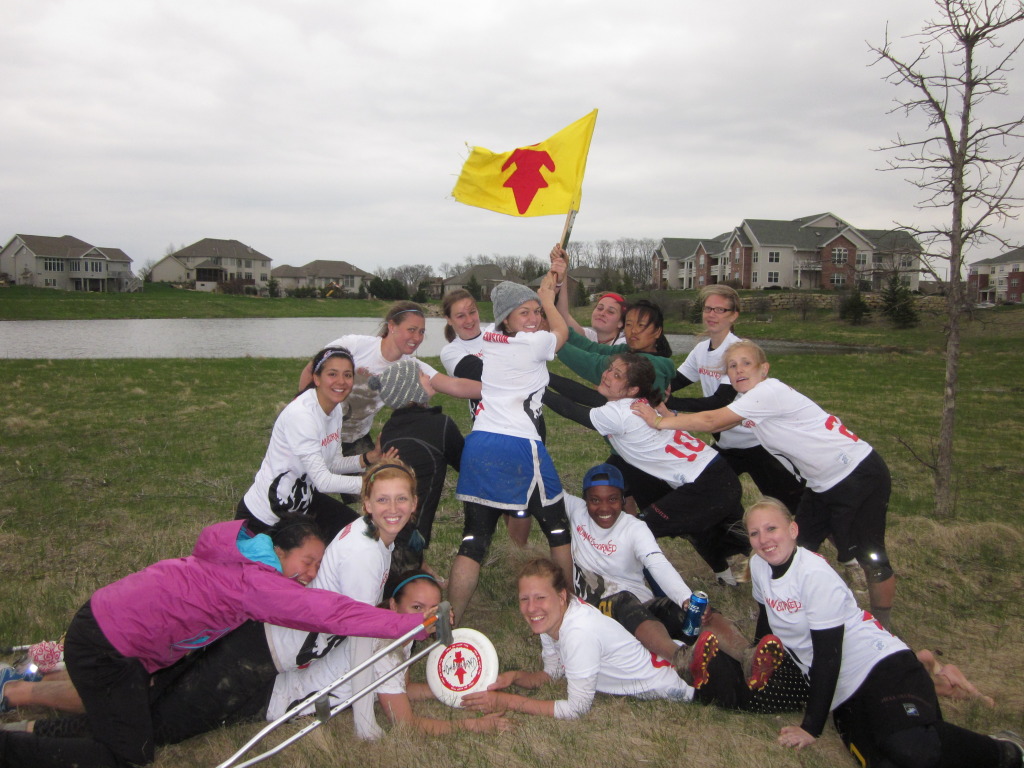
Look for us to perform as a team. We don’t have the biggest roster, but we are deep. There are definitely some names that people will be looking at on the field, but Scorned plays a team game and that is when we really do damage. You can also expect us to have a janky yellow flag and a boom box on our sideline.
How are practices going with it being the semester wrapping/wrapped up?
Practices are going great. Most of the girls have been in town the entire time (we had finals the week following regionals). The intensity level has definitely picked up, but we are really focusing on working out the kinks. It is also extremely helpful that all of us have the opportunity to play pickup with CLX on our non-practice days.
Any injuries sustained at Regionals? Any personnel losses or gains?
We had a couple injuries at Regionals, but nothing that we weren’t able to tape the crap out of or smother in Icy Hot. We lost people for a few points or a game or two, but we were sitting at full squad (mostly healthy) in the last game. We are much healthier this year than last, and you can count on us being in shape in Colorado!
Taking any precautions or special preparations for nationals?
We have a very carefully planned schedule that involves some working out, a significant amount of ultimate, lots of group activities, and then just a TON of other time spent together with each other. Many of us don’t have jobs but are in Ames until Nationals, so that leaves us with a lot of bonding time. In fact, we even had to appoint a new team position-Activities Director. Basically we are all hanging out and enjoying our last couple of weeks together as a team. It is absolutely amazing!
Anything else?
We are looking forward to have Warhead contests out in Boulder with anyone who is willing to challenge us.
Tuesday, May 24, 2011
Florida FUEL: Tradition of Excellence
 |
| Pav skies the pack at Regionals 2011. |
Part of the re-structuring of the USA Ultimate College Series was the creation of two new regions, one of which was the Southeast. Capturing the bid from Southeast sends a team that is not new to the College Championships: Florida. FUEL is captained this year by standout player Pav Birk and returning to the big show for the 3rd time in its team’s history.
Pav, a 3-year veteran to the sport, has led FUEL back to its first trip to the College Championships since 2007. “I started my sophomore year of college with no clue what ultimate frisbee was and I was AWFUL at throwing a disc,” she says. But she stuck with it until her first tournament: Classic City Classic in 2007. “I didn’t know what to expect at an ultimate tournament, but I was blown away. First of all, playing that many games over a weekend was insane to me, but besides that, the intensity of game time situations got me hooked! I had no idea what I was getting myself in to, but the FUEL girls did whatever they could to help me with whatever questions I had and I really owe it to them for making me stay around and fall in love with ultimate.
The team, represents the newly created Southeast Region, which is comprised of teams from Florida, Georgia, Alabama, Mississippi, and Louisiana. Along with restructuring, the team has developed into a program, fielding a B team for the past two season. Pav details, “The program has developed a lot in the past few years. Last year we recruited enough ladies to start a B team and this year we’ve been able to see the benefits of having a second team.”
 |
| Jackie Fane laying out for a score |
The addition of a second team has helped FUEL to change its identity on the field as well. “I feel as though our team has also started to develop our own style of playing that is catered to the types of players on our team, which has really helped our flow and team chemistry,” explains Pav.
Florida’s open team has been receiving much attention, but the thriving Gainesville scene has helped to foster development of the women’s team tremendously as well, starting at the lowest levels of competition to introduce players to the sport, all the way through competitive club women’s. Pav describes, “There’s a lot [of ultimate] going on in Gainesville. Outside of college, there is lots of pickup at differing levels. A step up from that would be mens and co-ed intramural ultimate at UF, and then after that we have regular league seasons. Within the last year or two, past and current college/club players have organized regular goaltimate games throughout the week. Every year we usually have an open (Vicious Cycle) and womens (LaYuma) club team that offers great experience in between college seasons and give us an opportunity to improve our game by playing with some amazing club players.” FUEL has reaped these benefits fully, building the program’s strength back up.
FUEL has the opportunity to play year-round, with Gainesville’s great weather. “Weather isn’t too much of a problem, except that when it comes to the series it gets really hot and humid around here and the rain storms prevent practices every now and then (but that can happen anywhere),” says Pav. “So rather than being hindered but extreme cold weather in the fall, we have to deal with extremely hot practices.”
 |
| Katelyn Cobelens gets horizontal. |
The temperate climate helped to prepare FUEL’s trip to San Diego to attend Pres Day, early on in the 2011 College Regular Season. “As a captain, I was extremely proud of how we did. Before heading to San Diego, we had no clue what to expect,” she starts. “We were seeded fourth in our pool and ended day one 2nd in our pool, which was an amazing feeling.”
FUEL out-performed Sonoma State, Arizona, and USC in Pool A, which meant that they moved up into the power pools. “Day 2 meant we had to push even harder. With the exception of our Carleton College game, every one of the games that we played [on the second day] were battles. Even though we didn’t end up winners, I had never seen FUEL play and fight so hard and I couldn’t be happier.”
Of the tournament, Pav says, “We were seeded 16th and broke seed to end up eleventh.” Seeing great out-of-region competition early on helped to shape their focus going into the rest of the regular season and the Series. FUEL used this as an opportunity to work on new strategies and implement these tactics into their game plan. “More than anything, this tournament proved to ourselves that we are able play a higher level of ultimate and gave us more confidence to take with us throughout our season and on into Natties.”
Something else unique about FUEL, is its strong emphasis on tradition. FUEL is an accomplished program, and the 2010-2011 team approached the season with the goal to restore qualifying for nationals back into its culture. “All of us on the team has had a goal to make it back to Natties and be the team it was back in the day,” explains Pav. There to guide the team is its rich alumni support network in Gainesville to help prepare the team for the strong competition at the College Championships. “We are lucky enough to have many of the previous national qualifiers in Gainesville to help pump us up and even kick our asses in scrimmages.”
Furthermore, the alumni help keep traditions alive by passing on stories and other symbolic relics to the current members of FUEL. “[The alumni] share stories about the history of FUEL and we do our best to maintain it. For example, we have an MVP necklace that was started a few years ago that we award to a specific player every tournament. Things like this carry on a team and makes previous player feel as if they are just as much a part of the team today as us players do, and I love all the support!”
 |
| Jenna Dahl throwing through the mark |
Nationals Outlook
Florida comes with the sole bid out of the Southeast Region. Pav highlights, “We ended up first at regionals with pretty dominant games.” Florida won its games handily, with the exception of a Pool Play match up vs. the Georgia Hodawgs. She notes, “I think the most noteworthy part of the weekend was game one on Saturday. FUEL was down against GA 10-5. GA was on their game and FUEL came out flat, but after some serious pep-talking and focus we had a seven point streak to win 12-10. It was a wake-up call to say the least, but an impressive comeback at the same time.”
One of the challenges at regionals the team had to overcome was the numerous player absences during graduation weekend. “With many seniors on our team, we had some players missing, but we weren’t worried because the depth of our team meant that we could afford to miss a few key plays and still hold on to the title,” Pav explains.
Florida is in Pool B, seeded 18th overall, with Oregon, North Carolina, Ottawa and Carleton. The pool allows Florida to re-match Carleton and Oregon, who FUEL lost to at Pres Day.
As far as the focus going into nationals, the team is working on maintaining their chemistry. “I don’t think there will be any major adjustments other than regular adjustments as the games go along, but overall we are going to play our game.” Now that graduation and finals are over, the team has been focusing on maintaining team chemistry.
Florida is a team that fights tooth-and-nail until the end. “Nationals has been a goal for a majority of our team for a number of years now, and now that we have earned a spot there, we are going to leave it all on the field and give it all we have.”
 |
| FUEL: South East Regional Champs 2011. |
The Defending Champs: Oregon Fugue
There are talented teams. And then there are talented teams who have Lou Burruss as their coach. Thankfully, there is only one competing at college nationals. An already stacked Fugue team has a ton of athleticism and skill, and they also happen to have one of the best coaches in the game.
Fugue, the defending champs of the Women's Division College Championships, has had a history of strong season performances. The team finished 3rd in 2009 and 2nd 1998, qualifying ten times in 1988, 1989, 1998, 2002, 2003, 2008, 2009, 2010 and 2011. The last four seasons have been with Burruss as their coach.
Lou Burruss, who has been playing and coaching ultimate since 1990, has been coaching in the college women’s nationals scene since 1997. He has led eight teams to nationals in eight seasons of coaching, and has been with Fugue since 2008. It’s safe to say he knows how to help a team realize its strengths and weaknesses, and put the plan into action.
Part of this is the knowledge of approaching each season as a different one than the last. “The challenge of coaching college is that every team is brand new, unlike club ultimate where there is a lot more continuity. A big part of what you are doing is to try to develop individual players into a successful and valued role on the team and develop the team identity to a point where things click,” explains Burruss.
When it comes to applying this concept in the college women’s game, no one understands this better than Fugue. Defending the title from the 2010 College Championships, the team has set out to create a different identity from last year’s team. “We set out to distinguish ourselves from last year's team in our own minds, so we don't think about it [the title] much. I don't think other teams are [thinking about it] either. If we were 35-2 or so, it might be different, but we're 28-7,” says Burruss. The approach to the season must be different each and every season, to deal with the difference in team strengths and weaknesses.
Fugue has been preparing for nationals all season long. Burruss gives an insight to what Fugue’s players do all season long. “We do the traditional 3 practices and a track/agility. Additionally, I push the players to get in the weight room and I think about 75% of them are taking a weights class that puts them in the weight room three days a week. I also give throwing assignments to particular players to work on outside of practice.” Though the team works hard, Lou tries to encourage individuals to work hard because they WANT to. “We are a varsity sport and we don’t have those expectations or identity of coach-player relationship, so I always try to set things up to say - if you want to get better you need to do 'this' or 'that.' Then the player can decide for herself how much she wants to put in,” he explains.
Using this system, Fugue has run into very few personnel problems with conflicting individual and team goals. “We run on a philosophy of individual integrity and individual weirdness, so we have fewer conflicts than a team that uses a more my-way-or-highway approach. I also try to find roles for players that are compatible with their individual styles/personalities/goals so that there is less likely to be a conflict. When it does happen (which is very rare) it means a long conversation or series of conversations to get myself, the player and the team all on the same page,” describes Burruss.
Nationals Outlook
Fugue has locked down the 2nd seed behind UC-Santa Barbara. Fugue also returns 2010 Callahan finalist, Julia Sherwood, standout Bailey Zahniser, 2011 Callahan Nominee Katy Craley and speedster Christina Wickman, as well as adding talented freshman Sophie Darch to the lineup.
When Fugue is healthy, they are one of the toughest, most athletic teams in the game; however, this has not been the case in 2011. Fugue has been plagued by a ridiculous number of injuries in the regular season this year. “It's been rough. In the 20+ seasons I've played and coached, this has been far and away the worst. In ‘08 we lost three women to knees, but two were at regionals and that was the total injury situation. Usually, I figure you'll lose 1 for the season and 2 or 3 little injuries at a time, but we haven't had less than 4 at any point during the season,” describes Burruss. This culminated at Women’s Centex in the end of March where Fugue had as many players in the game as they did restricted to the sidelines due to injuries.
This has caused Fugue to make some adjustments to get the team running as a championship contending team. “The mental adjustment has been to take a 'dirt road' mentality which is one of nose-down struggle and emotion. Hard work over beauty. Everything twice as hard as it needs to be, because it is,” says Burruss.
Fugue has had a roller-coaster of a season. Winning Pres Day. Finishing and taking 2nd at Stanford Invite. Finishing 8th at Women’s College Centex. Taking 2nd at Northwest D1 Conference Championship. Finishing off with a huge win in the Northwest Regional Championship over talented Washington and UBC squads.
Though the team is around Eugene and in school into June, the team is tapering into nationals. Going into Boulder, the team will have a smaller roster than they did in ’10, but will have about eighteen or so healthy players, according to Lou.
When it comes to X’s and O’s, expect Fugue to run quick transitions on O and D, challenging teams deep in every offensive possession (especially on turnovers) and coming up with big defensive plays: typical Fugue ultimate. The team also does a particularly good job of taking advantage of mis-matches on the turn.
Will Fugue walk away from the 2011 College Championships with a back-to-back title? We’ll see in a couple of weeks in Boulder.
Fugue, the defending champs of the Women's Division College Championships, has had a history of strong season performances. The team finished 3rd in 2009 and 2nd 1998, qualifying ten times in 1988, 1989, 1998, 2002, 2003, 2008, 2009, 2010 and 2011. The last four seasons have been with Burruss as their coach.
Lou Burruss, who has been playing and coaching ultimate since 1990, has been coaching in the college women’s nationals scene since 1997. He has led eight teams to nationals in eight seasons of coaching, and has been with Fugue since 2008. It’s safe to say he knows how to help a team realize its strengths and weaknesses, and put the plan into action.
Part of this is the knowledge of approaching each season as a different one than the last. “The challenge of coaching college is that every team is brand new, unlike club ultimate where there is a lot more continuity. A big part of what you are doing is to try to develop individual players into a successful and valued role on the team and develop the team identity to a point where things click,” explains Burruss.
When it comes to applying this concept in the college women’s game, no one understands this better than Fugue. Defending the title from the 2010 College Championships, the team has set out to create a different identity from last year’s team. “We set out to distinguish ourselves from last year's team in our own minds, so we don't think about it [the title] much. I don't think other teams are [thinking about it] either. If we were 35-2 or so, it might be different, but we're 28-7,” says Burruss. The approach to the season must be different each and every season, to deal with the difference in team strengths and weaknesses.
Fugue has been preparing for nationals all season long. Burruss gives an insight to what Fugue’s players do all season long. “We do the traditional 3 practices and a track/agility. Additionally, I push the players to get in the weight room and I think about 75% of them are taking a weights class that puts them in the weight room three days a week. I also give throwing assignments to particular players to work on outside of practice.” Though the team works hard, Lou tries to encourage individuals to work hard because they WANT to. “We are a varsity sport and we don’t have those expectations or identity of coach-player relationship, so I always try to set things up to say - if you want to get better you need to do 'this' or 'that.' Then the player can decide for herself how much she wants to put in,” he explains.
Using this system, Fugue has run into very few personnel problems with conflicting individual and team goals. “We run on a philosophy of individual integrity and individual weirdness, so we have fewer conflicts than a team that uses a more my-way-or-highway approach. I also try to find roles for players that are compatible with their individual styles/personalities/goals so that there is less likely to be a conflict. When it does happen (which is very rare) it means a long conversation or series of conversations to get myself, the player and the team all on the same page,” describes Burruss.
Nationals Outlook
Fugue has locked down the 2nd seed behind UC-Santa Barbara. Fugue also returns 2010 Callahan finalist, Julia Sherwood, standout Bailey Zahniser, 2011 Callahan Nominee Katy Craley and speedster Christina Wickman, as well as adding talented freshman Sophie Darch to the lineup.
When Fugue is healthy, they are one of the toughest, most athletic teams in the game; however, this has not been the case in 2011. Fugue has been plagued by a ridiculous number of injuries in the regular season this year. “It's been rough. In the 20+ seasons I've played and coached, this has been far and away the worst. In ‘08 we lost three women to knees, but two were at regionals and that was the total injury situation. Usually, I figure you'll lose 1 for the season and 2 or 3 little injuries at a time, but we haven't had less than 4 at any point during the season,” describes Burruss. This culminated at Women’s Centex in the end of March where Fugue had as many players in the game as they did restricted to the sidelines due to injuries.
This has caused Fugue to make some adjustments to get the team running as a championship contending team. “The mental adjustment has been to take a 'dirt road' mentality which is one of nose-down struggle and emotion. Hard work over beauty. Everything twice as hard as it needs to be, because it is,” says Burruss.
Fugue has had a roller-coaster of a season. Winning Pres Day. Finishing and taking 2nd at Stanford Invite. Finishing 8th at Women’s College Centex. Taking 2nd at Northwest D1 Conference Championship. Finishing off with a huge win in the Northwest Regional Championship over talented Washington and UBC squads.
Though the team is around Eugene and in school into June, the team is tapering into nationals. Going into Boulder, the team will have a smaller roster than they did in ’10, but will have about eighteen or so healthy players, according to Lou.
When it comes to X’s and O’s, expect Fugue to run quick transitions on O and D, challenging teams deep in every offensive possession (especially on turnovers) and coming up with big defensive plays: typical Fugue ultimate. The team also does a particularly good job of taking advantage of mis-matches on the turn.
Will Fugue walk away from the 2011 College Championships with a back-to-back title? We’ll see in a couple of weeks in Boulder.
Monday, May 23, 2011
North Carolina-Wilmington Seaweed: Athletic Team from the AC
 |
| Kelly Tidwell on the mark. |
This team has taken the ultimate scene by storm with their roster that is chalk-full of athletic talent. The Seaweed are able to fill personnel losses in their roster every year by taking advantage of their successful recruiting tactics. “Our main method of recruitment is word of mouth and the UNCW involvement fair at the beginning of each year. We set up a table and basically harass athletic looking girls until they come over and sign up,” they explain.
Taking these athletic recruits, the team wastes no time, and throws them into the ring right away. “Our method for developing rookie talent is to basically toss them right into the middle of everything,” say Chastain and Patrick. “Danny, our coach, always says that ‘in order to learn, you gotta play.’ We put them into scrimmages their first couple practices, and as they begin to understand the game more, there's a lot more focus on throwing and other fundamental skills.”
The focus then becomes working hard until they can’t work any harder; and then they work some more. “Returners realize the hard work needed to have a successful season, and we show that from day 1 at practice,” they emphasize. “We also realize that having fun outside of practice is really important too.....so it's inevitable that from the beginning of the season we get into the habit of working really hard at practice, and then hanging out a lot outside of practice. It starts out as crashing on someone's couch or getting lunch together, and turns into living with each other by your 2nd or 3rd year. The commitment we have to the sport and to each other seems to be a main driving factor in attracting new players.”
The captains of Seaweed find 2011 to be similar to last year, however the roster is much different. “This season is similar to last in terms of our win/loss record and the types of tournaments we attended, but it is different in terms of our rotation and type of players. Last year we had a rotation full of experienced players. This year we have a core group of vets and have worked to incorporate more players into the rotation who don't have as much experience. Our 1st and 2nd year players have worked so hard this year. Without them, we wouldn't be where we are today. A lot of them have stepped up in a huge way,” they highlight.

Nationals Outlook:
UNC-Wilmington comes into Nationals after winning a tough Atlantic Coast Region over North Carolina (AC 2) and Virginia (AC 3).
The captains note that the team sustained no major injuries at Regionals, but had “few girls who were not at 100% and were still coping with some injuries sustained at Sectionals.” Of those “Logan Shapiro, Mikayla Chiarello, Michelle Guadagno, and Ali Carson coincidently and unluckily sustained ankle and tendon injuries. They worked hard to get back to playing shape and were major contributors to Seaweed's success at Regionals.”
On the other hand, “Jessica "Patti" Patrick is currently working hard to recover from a torn hamstring that she re-injured at Sectionals, she was unable to play at Regionals.” Even with the injuries, Seaweed was able to go undefeated at Regionals with decisive point margins, beating Virginia in semi-finals 15-6 and North Carolina 15-3.
The team has taken this momentum in their post-season preparation for the College Championships by increasing the number of practices the team has, and playing a great deal of ultimate. The focus is on getting and staying healthy.
Wilmington goes into the College Championships seeded 3rd overall, earning the top-seed in Pool C. In order to advance straight into quarter-finals, the team will have to knock off TEAMS IN POOL C! Look for speedster Kelly Tidwell to team up with Claire Chastain for big throws, and Sara Casey and Jessica Patrick to pull down goals.
Sidenote: The Seaweed also wanted to give a shout out to their coaches Danny Wrenn and Nikki Zeldin. “They are two of the most dedicated and knowledgeable coaches in the sport of ultimate. They are a major part of our success as a team. They are also HILARIOUS!”
Subscribe to:
Posts (Atom)